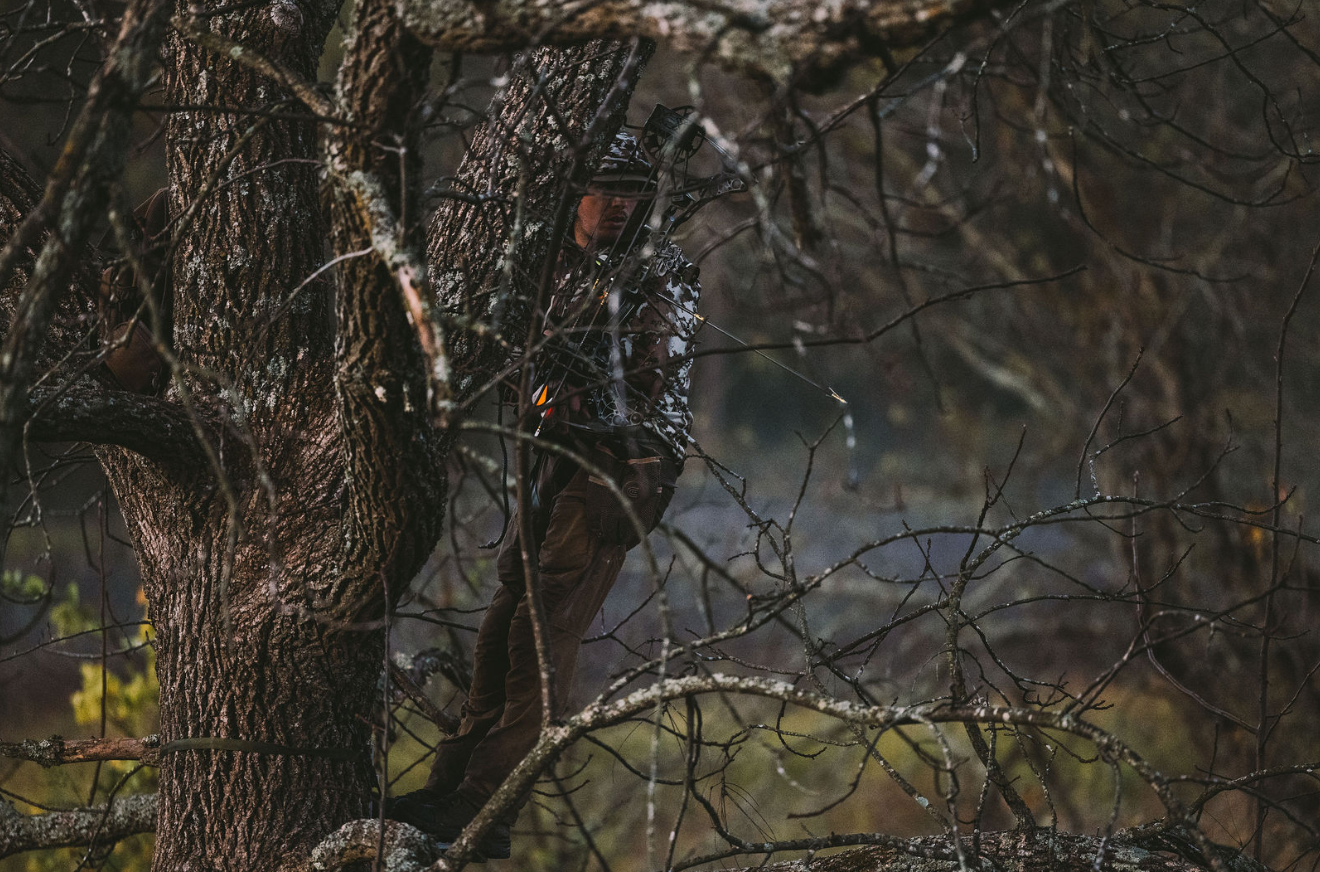
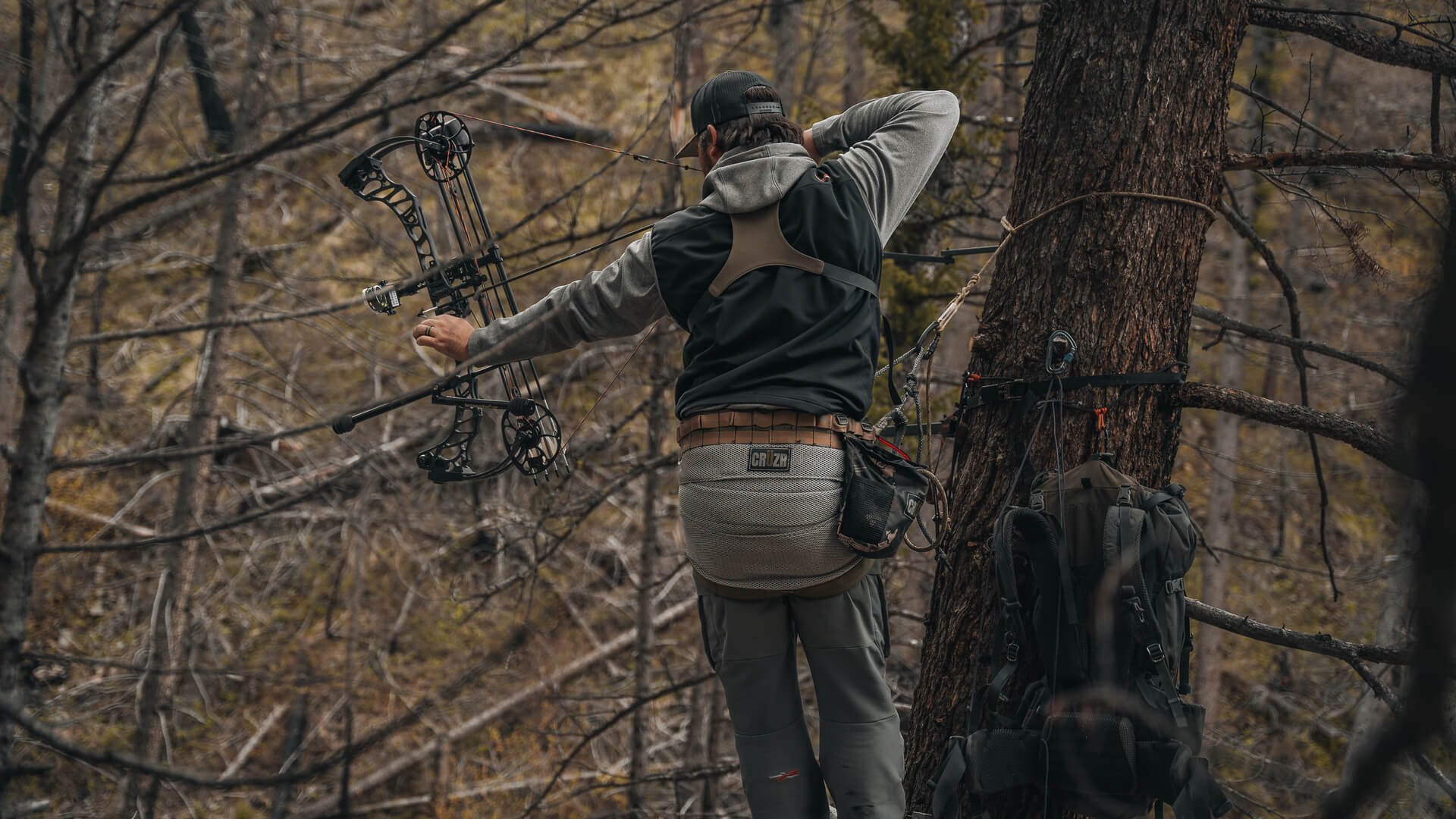
You’re 25 feet up, miles from the truck, no cell service, and something just shifted. Maybe a stick kicked. Maybe a strap slipped. What you do next is why preparation isn’t optional in the woods.
That’s exactly where a Saddle Hunting Rappel Kit earns its place in your pack. And despite what most hunters assume, it’s not just a one-sticker’s tool. It can be an essential piece of every saddle hunting setup — no matter how you climb.
Here’s what a proper rappel kit is made of, why it matters, and how it could save your hunt (or more) the next time something goes sideways in the woods.
What Is a Rappel Kit?
A rappel kit is a compact, lightweight system that gives you complete control on the descent. No improvising. No white-knuckling it down a climbing stick you’re suddenly not so sure about. Just a clean, controlled return to the ground every time.
A well-built kit has five core components:
1. The Rappel Rope
This is the backbone of the system. Most hunters run about 40 feet of rope — enough to handle steep terrain, uneven banks, and the occasional taller-than-expected hang. The Canyon Elite 9mm is a popular choice among serious saddle hunters for its balance of durability and packability.
2. The Descent Device
This is where control actually happens. Mechanical descenders like the Mad Rock Safeguard or the Petzl GriGri+ automatically grip the rope and feature a smooth operating handle for a fluid, controlled descent — no backup knots needed.
3. The Carabiner
Your carabiner connects the descender to your saddle’s bridge making it your primary point of attachment. This is no place to cut corners. Always use a climbing-rated, locking carabiner like the CRÜZR Oval Screw Gate Carabiner, built specifically for the demands of elevated hunting heights.
4. The Quicklink
The quicklink is your anchor point at the top of the tree. Rather than feeding all 40 feet of rope through a loop around the tree, the quicklink allows you to girth hitch your rope quickly and cleanly — saving precious time, especially when navigating branches. Always deploy your lineman’s belt before setting this up.
5. The Dynaglide Retrieval Line
This thin 1.8mm Dyneema cord does two critical jobs: it retrieves your rappel rope from the tree after your descent, and it doubles as a gear pull-up rope. Attach it to your rope just behind the quicklink before you start coming down. Skip this step, and you’re climbing back up to get your rope. This is a mistake most hunters only make once.
Why Rappelling Isn’t Just for One-Stickers
Here’s the reality: every climbing system can have its own issues. A stick can kick. A strap can slip. A step can shift at exactly the wrong moment. When that happens 25 feet off the ground, your options narrow fast.
A rappel kit changes that equation entirely. No matter how you climbed up, you have a controlled, reliable way back down. It isn’t just safety gear. It’s your exit strategy.
5 Rappelling Mistakes Saddle Hunters Make (And How to Avoid Them)
Even experienced hunters can develop bad habits. Here are the most common rappelling mistakes — and how to make sure you’re not making them.
1. Forgetting to attach the Dynaglide before descending. This is the most common and most frustrating mistake in rappelling. Once you’re on the ground, there’s no retrieving your rope without climbing back up. Always attach your retrieval line to the rope before you start your descent.
2. Using non-rated hardware. Not all carabiners are created equal. Using a non-climbing-rated carabiner as your primary attachment point is a risk that simply isn’t worth taking. Every single piece of hardware in your rappel kit should be rated for climbing loads. No exceptions.
3. Skipping the lineman’s belt during rope setup. Setting your rope and quicklink around the tree without a lineman’s belt for backup is one of the most common safety shortcuts in the tree — and one of the most dangerous. Always have yourself secured to the tree at all times!
4. Using a rope that’s too short. Forty feet is the standard for a reason. Hunters who try to get by with less frequently find themselves short on steep hillsides, elevated banks, or unexpected terrain. Don’t guess — use a rope you know will reach the ground.
5. Improper descender setup. A mechanical descender loaded incorrectly won’t brake the way it’s designed to. Before your first hunt of the season, run through your descender setup on the ground. Know your device, know how it loads, and know how the handle operates before you’re 25 feet up in the dark.
Build Your Saddle Hunting Rappel Kit with CRÜZR
A proper rappel kit isn’t a luxury — it’s part of what makes a complete saddle hunting setup. CRÜZR’s Rappel Kit includes everything you need to descend safely and confidently, all in one purpose-built kit.
Be prepared. Hunt with a plan.